Freeride · Rocker, camber, rocker
Movement FLY 102 2026
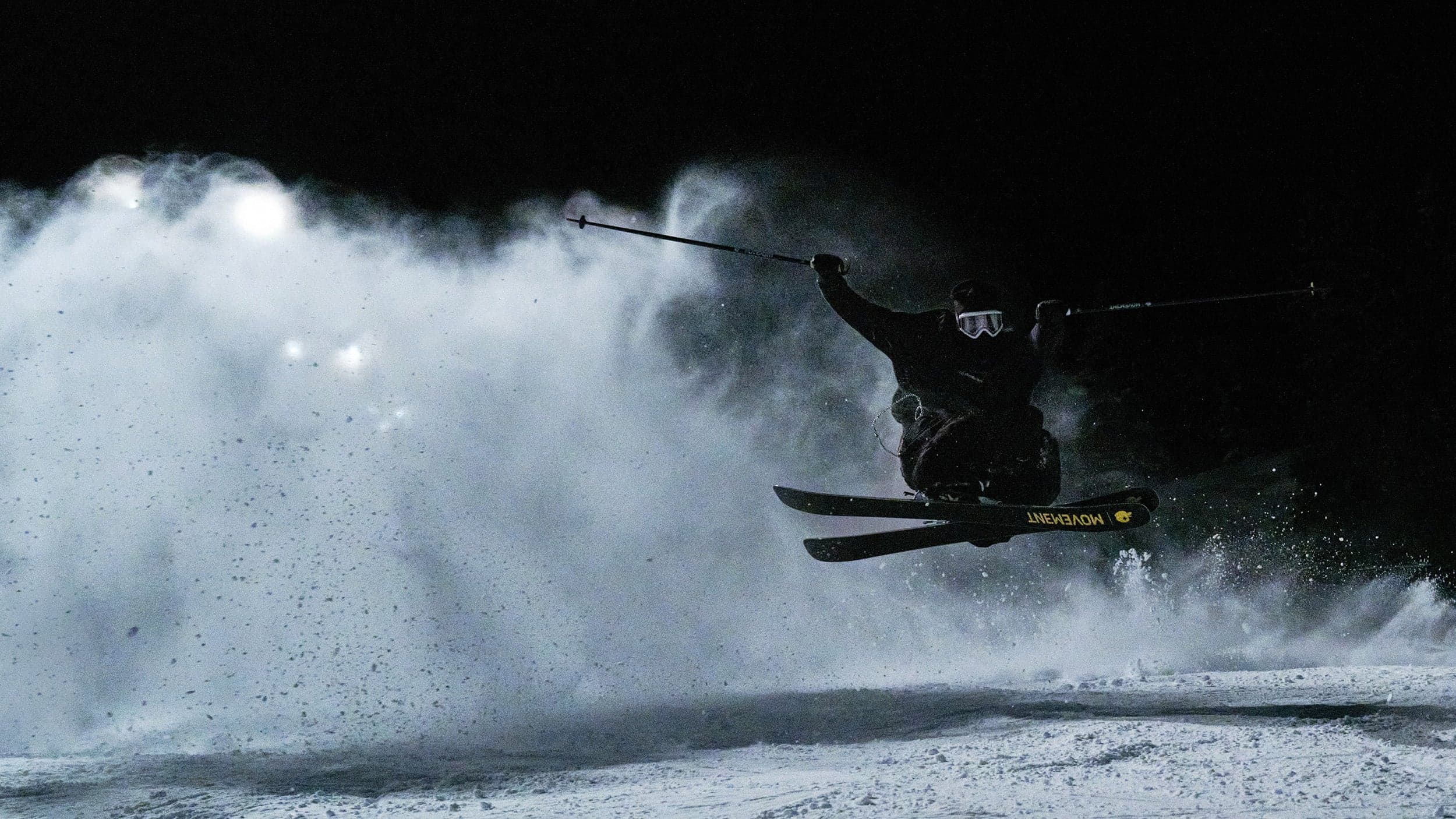
- Category
- Freeride
- Profile
- Rocker, camber, rocker
- Lengths
- 170 · 178 · 186 cm
- Tip / waist / tail
- 128 / 102 / 123 mm
- Radius
- 17.5 m at 178 cm
- Weight
- 1,860 g per ski at 178 cm
- Core
- poplar woodcore
- Metal
- not stated
- Carbon
- not stated
- Sidewall
- not stated
- Base
- high-durability sintered base
- Intended ability
- not stated
Lengths and published dimensions
170 cm
- Tip (mm)
- 127.0
- Waist (mm)
- 102.0
- Tail (mm)
- 122.0
- Radius (m)
- 16.5
- Weight (g, per ski)
- 1,750
178 cm
- Tip (mm)
- 128.0
- Waist (mm)
- 102.0
- Tail (mm)
- 123.0
- Radius (m)
- 17.5
- Weight (g, per ski)
- 1,860
186 cm
- Tip (mm)
- 129.0
- Waist (mm)
- 102.0
- Tail (mm)
- 124.0
- Radius (m)
- 18.5
- Weight (g, per ski)
- 1,950
| Length | Tip (mm) | Waist (mm) | Tail (mm) | Radius (m) | Weight (g, per ski) |
|---|---|---|---|---|---|
| 170 cm | 127.0 | 102.0 | 122.0 | 16.5 | 1,750 |
| 178 cm | 128.0 | 102.0 | 123.0 | 17.5 | 1,860 |
| 186 cm | 129.0 | 102.0 | 124.0 | 18.5 | 1,950 |
“est.” marks a number the maker does not publish: ours. Where each number was read is under “Where these numbers come from” at the bottom.
What the model says
Carve radius, to scale
- Sidecut radius: 17.5 m
- Carve radius at 30° edge: 15.2 m
- Carve radius at 45° edge: 12.4 m
Edge hold and float
- Edge hold: 95%, Holds well
- Float: 76%, Floats well
The Movement FLY 102 at 178 cm, worked out by the Edge Lab model for three skier weights.
70 kg skier
- Carve radius at 30° / 45° / 60°
- 15.2 / 12.4 / 8.8 m
- Edge hold, groomed
- Holds well (98%)
- Edge hold, ice
- On the limit (63%)
- Float, powder
- Floats well (88%)
90 kg skier
- Carve radius at 30° / 45° / 60°
- 15.2 / 12.4 / 8.8 m
- Edge hold, groomed
- Holds well (95%)
- Edge hold, ice
- Slides (58%)
- Float, powder
- Floats well (76%)
110 kg skier
- Carve radius at 30° / 45° / 60°
- 15.2 / 12.4 / 8.8 m
- Edge hold, groomed
- Holds well (92%)
- Edge hold, ice
- Slides (55%)
- Float, powder
- Some float (68%)
| Skier | Carve radius at 30° / 45° / 60° edge | Edge hold, groomed | Edge hold, ice | Float, powder |
|---|---|---|---|---|
| 70 kg | 15.2 / 12.4 / 8.8 m | Holds well (98%) | On the limit (63%) | Floats well (88%) |
| 90 kg | 15.2 / 12.4 / 8.8 m | Holds well (95%) | Slides (58%) | Floats well (76%) |
| 110 kg | 15.2 / 12.4 / 8.8 m | Holds well (92%) | Slides (55%) | Some float (68%) |
These are the model’s numbers, not measurements. Carve radius comes from the sidecut, so it does not change with weight; edge hold and float do. Flex and camber are our estimates (see “What the model uses” below).
By ability
The Movement FLY 102 at 178 cm for a 90 kg skier on groomed snow. Reviewers are mostly experts, so read the left of each band for what most skiers get.
Edge hold
On firm snow, 178 cm- First-timer: slides (18%)
- Beginner: slides (39%)
- Intermediate: on the limit (67%), assumed level
- Advanced: holds well (90%)
- Expert: holds well (95%)
Float
In soft snow- First-timer: some float (58%)
- Beginner: some float (62%)
- Intermediate: some float (65%), assumed level
- Advanced: floats well (71%)
- Expert: floats well (76%)
Ease
How forgiving it is- First-timer: hard (33%)
- Beginner: easy (92%)
- Intermediate: easy (100%), assumed level
- Advanced: easy (88%)
- Expert: manageable (78%)
Our model, run with working assumptions about how each level skis (edge angle, speed, how much weight reaches the edge). Not measurements. The marked cell assumes an intermediate skier; compare with your own details to see your own level.
Who it suits
It suits
- 70 kg, intermediate, on groomers170 of 547 skis in the catalogue for this skier.
- Carve radius about 15.2 m at 30° edge and 12.4 m at 45° (178 cm)
- Strongest here: edge hold. Even its weakest part, turn shape, is solid.
- 90 kg, advanced, all over the mountain115 of 547 skis in the catalogue for this skier.
- Strongest here: turn shape. Even its weakest part, float, is solid.
- 110 kg, expert, off-piste in soft snow124 of 547 skis in the catalogue for this skier.
- Strongest here: edge hold. Even its weakest part, float, is solid.
It doesn’t suit
It lands in the top half of the catalogue for all three skiers we check.
What the model uses
| Flex underfoot | 155 N·m²est. | Edge Lab archetype default (interpolated by waist) (read 9 Oct 2026) |
|---|---|---|
| Camber height | 3.2 mmest. | Edge Lab archetype default (interpolated by waist) (read 9 Oct 2026) |
| Tip rocker | 25.2 % of lengthest. | Edge Lab archetype default (interpolated by waist) (read 9 Oct 2026) |
| Tail rocker | 13.9 % of lengthest. | Edge Lab archetype default (interpolated by waist) (read 9 Oct 2026) |
| Tip rocker height | 18.9 mmest. | Edge Lab archetype default (interpolated by waist) (read 9 Oct 2026) |
| Tail rocker height | 9.1 mmest. | Edge Lab archetype default (interpolated by waist) (read 9 Oct 2026) |
| Mount point offset | -6.3 cmest. | Edge Lab archetype default (interpolated by waist) (read 9 Oct 2026) |
Made of
| Core | poplar woodcore |
|---|---|
| Fibreglass | Triaxial |
| Base | high-durability sintered base |
| Maker's description | poplar woodcore, 3-axis glass fiber |
Only what the maker prints. A field left out is one the maker does not state.
What reviewers say
No published reviews of this ski yet.
Compare with…
- Movement FLY 102 vs Armada DECLIVITY X 102 (side by side for your setup)
- Movement FLY 102 vs Blizzard Anomaly 102 (side by side for your setup)
- Movement FLY 102 vs Blizzard Rustler 10 (side by side for your setup)
Where to buy
No shops to show for this ski yet. When we list one, it appears here with the reason it was picked.
Where these numbers come frommovementskis.com, edgelab.ski, read 9 Oct 2026· “est.” marks ours
- FLY 102 - Movement (read 9 Oct 2026)
- Edge Lab archetype default (interpolated by waist) (read 9 Oct 2026)
Numbers come from the maker’s own pages, with the date we read them. “est.” marks a number the maker does not publish: ours.